Sorry, you need to enable JavaScript to visit this website.
Skip to main content
Puppy Buying Guide: Finding the Right Breeder
13 mins read
Finding the right breeder is crucial to make sure that your pup has received the best start to grow into a happy and healthy dog. Find out what to look for in a puppy breeder with this guide. Adding a new puppy to your household is an exciting time, but it does come with its own little stresses. Before you get your hands on that adorable ball of fluff, there's a few things to consider, such as, am I ready to dedicate my life to a dog? And what breed best suits my lifestyle? Then, once you've answered all these questions you need to find a reputable breeder to ensure that you're buying a puppy that's in good health and is well-cared for. To make your lives easier, we've put together this puppy buying guide to help you on your journey to getting your new four-legged friend. Buying a puppy checklist Before buying a puppy, you will need to be able to answer yes to all the questions on our buying a puppy checklist. Dog ownership can be extremely rewarding as it brings you unconditional love companionship, a healthier lifestyle and a sense of joy. But are you ready for the commitment? • Can I afford to own a dog for its life? Things to think about are food, veterinary fees, possible grooming costs, kennelling fees and insurance costs. • Are my circumstances right for a dog? This includes work hours and size of home. Will there be someone at home if I work long hours? • Can I make a lifelong commitment to a dog? The average lifespan of a dog is around 12 years and so you will need to be able to commit for this length of time. • Will I be able to exercise the dog every day? Will I be able to train, groom and generally care for the dog? • Can I answer yes to all the questions on the buying a puppy checklist, 365 days of the year? If the answer is yes then you can move onto and research the next steps. Which dog breed is right for me? The next step on our puppy buying guide is that you'll need to decide which dog breed is right for you depending on your preferred size, exercise levels, grooming needs and if they suit family life. There are many breeds out there and all will suit different sorts of people and circumstances. A Border Collie, for example, will not do well in a flat with no garden and no access to regular exercise, whereas a smaller breed such as a Chihuahua will likely not mind.
Pastoral Dogs: Everything You Need to Know
15 mins read
Pastoral dog breeds come in many shapes and sizes, but they all love nothing more than having a job to do. Here is what you need to know about these hard-working canines, from grooming requirements to the type of exercise they like best. Pastoral dog breeds love working with their owners and will wag their tails whenever the whole family gets involved, whether it's training, exercising or play time. Given their expertise in moving and protecting livestock, it's no wonder that pastoral dogs can easily become reliable members of the family, always happy to cooperate, but extremely keen on large amounts of exercise. Find out what makes these dogs such beloved companions and discover the diverse line-up of pastoral breeds, including the short, but sturdy Welsh Corgi as well as the larger German Shepherd. A pastoral dog's job Pastoral dogs hail from all over the world, and were originally bred to herd, move and sometimes also protect, livestock. Depending on their size and skills, pastoral breeds were entrusted with diverse jobs that involved looking after sheep, goats, cattle or even in some cases reindeer. Pastoral dog breeds sizes As a result of their diverse background, pastoral breeds come in virtually all sizes and coat types, from the smaller heelers (who move livestock by nipping at their heels) to the giant breeds who are guardians as well as herders and hence need to be larger and more powerful. The natural instincts of pastoral breeds Like all working breeds, pastoral dogs utilise their natural canine behaviours to do the jobs that humans have developed them for. Pastoral breeds are specialists in watching livestock and then working with their owner, using the stalk/chase part of their hunting behaviour to move them where they need to go. A herding dog shouldn't bite their charges and so individuals who were weak in the 'bite' part of the predatory behaviour were generally used to create these breeds. The exception is the heelers - for whom nipping at the heels of cattle was their strategy for encouraging animals more than 10 times their size to go somewhere they might not want to. As this predatory behaviour is self-rewarding for dogs owners have to be aware that not only do their dogs enjoy carrying out these behaviours, they also need an outlet for their hard-wired instincts to stay healthy and happy. This doesn't mean you need a flock of sheep in the garden, but it does mean that these are hard-working dogs who relish having a job to do that involves owner interaction, and controlled stalking, chasing and brain work. Pastoral dog breeds behaviour and personality Here are a few things to keep in mind when deciding whether a pastoral dog is the companion for you.
Military and Police Dogs
6 mins read
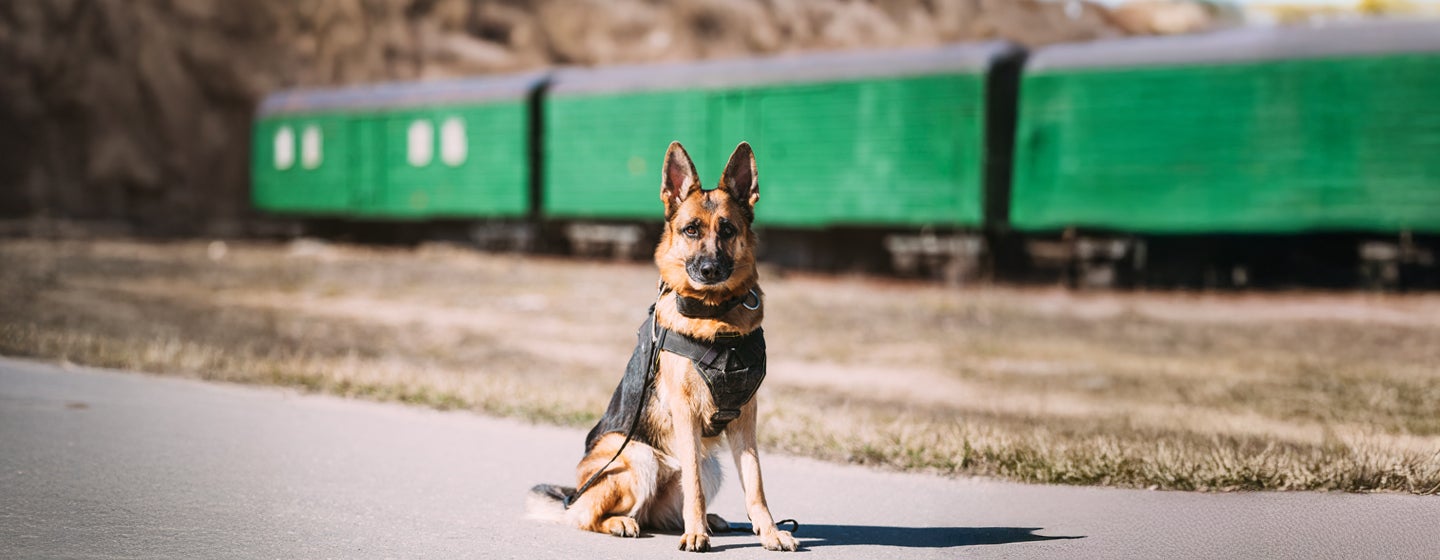
Military and police dogs are amazing in all sense of the word. These pups with super-powered noses assist in a huge range of duties for law enforcement including everything from drugs detection to general protection work. Learn all you need to know about the types of police dogs and the duties they carry out with Purina. There are some breeds of dog which are never happier than when they have a job to do. Previously, working dog breed types were used for hunting - and many still are - but as the land developed and areas became more urbanised, these breeds had to find careers elsewhere. Many of these breeds are now finding success in the police and military, thanks to their super-powered noses and strong work ethic. Today, military and police dogs are seen all over the world and they undertake numerous tasks including general purpose support work, search and rescue and detection. The work these dogs do is paramount in assisting the forces and they can even help to uncover evidence which may have been missed by the human eye, can quickly apprehend suspects and even help track down missing people. Keep reading to find out all you need to know about the types of police dogs and the work they do. General purpose police dog types Almost every force will employ a number of general-purpose police dogs. Their main task is to deter suspects from running and if they do, to apprehend them and assist the officer in making the arrest. That's not all though - these police dog types can be used for anything from guarding, protection and tracking, and they're great at locating drugs, evidence and even human remains. The most common general-purpose types of police dogs you'll encounter are:
Medium-Sized Dog Breeds
14 mins read
If you're not sure what dog is right for you, a few breeds are notoriously popular for being just right for households. Somewhere between the tiny pups and the gentle giants of the canine world sit the most beloved medium-sized dogs. Discover them here. Small dogs are cute but they can be quite feisty at times. Large dogs are protective but can be a handful and may just drive you crazy with their love for fetching games. Sometimes the best of both worlds is somewhere in the middle. These are the popular medium-sized dog breeds. They're not too big, and not too small - they're just right! The breeds on this list are all a similar size, but their personalities couldn't be more different. Here are some of the most lovable and friendly medium-sized dog breeds. Medium-sized dog breeds Basset Hound - relaxed Laid back, gentle and ready to become fast friends with every member of the family, including children, the Basset Hound comes with all the joys of having a dog. Their long ears and mournful eyes make them instantly recognisable, but they're also well-known for their copious drooling so keep this in mind if you're squeamish about the sofa and the carpets. The Basset Hound is a loyal companion, but expect to see their stubborn side as well from time to time, especially if they happen to sniff an interesting scent. They'll decide for themselves if it needs to be investigated further so it's best to keep them on a leash when going on walks.
Low-Maintenance Dog Breeds
5 mins read
Some dog breeds are happy with only moderate amounts of grooming and exercise, but don't think they'll show you less affection for it. Discover some of the most charming low-maintenance dogs. Low-maintenance dogs come in all shapes and sizes. Although some think that tiny breeds will make a dog owner's life a bit easier, some of the most undemanding canines are actually on the larger side of dog breeds. There is no such thing as a zero-maintenance dog, so expect walking, feeding, grooming and playing to still be part of the routine. But there are a few canines able to match hectic schedules better than the rest. These are the low-maintenance dog breeds. Discover some of the most popular ones, big and small, below. Low-maintenance dog breeds: the usual suspects Some dogs are just meant for busy owners. Whether it's their minuscule size that can make the most of a small garden, their coat that barely sheds or the minimal grooming requirements, the toy breeds are the obvious undemanding companions. Here are some of the loveliest small low-maintenance dogs you can have in your life.
Hound Dogs_Everything You Need to Know
Hound Dogs: Everything You Need to Know
16 mins read
Take a deep dive into the world of hound dog breeds and discover the behaviour and personality that makes them such beloved family members. From giants to dainty dogs, this group has got them all. From the majestic Afghan Hound to the miniature stance of the Beagle, hound dog breeds have stolen our hearts for generations. If you're thinking of bringing one home, there are a few things you need to know. With profiles that include various sizes, personalities and instincts, here are the hound breeds in a nutshell. A hound dog's job The hound dog breeds group consists of dogs who were developed to help humans with hunting either on horseback (generally the longer-legged hounds dogs) or on foot (the shorter-legged hounds). They do this in two very distinct ways - either using their keen eyesight or else by following a scent. Some of these hounds are pack hound who work in a group while others work individually. Scent hounds Scent Hounds, as their name suggests, love to follow scent trails even over long distances. They love searching for things as part of their playtime, and with their impressive stamina they're the perfect companion for long walks. Scent hound breeds are also keen to go searching for objects hidden around the home and garden at the end of scent trails, which means lots of fun and games for you both. They enjoy carrying soft toys, but may not respond particularly quickly to training or even be that interested! They normally have pendulous ears and a smooth or wiry coat. Sighthounds Sighthounds are playful, high speed sprinters who love to chase and, as their name suggests, hunt by sight rather than through their noses! If you have a sighthound, allowing them to exercise their natural instincts is an important part of their unique care. Sighthounds love to run, occasionally setting off on very fast sprints that leave you behind! Physically, your sighthound has an athletic, slender and streamlined shape with proportionally long legs and a long, narrow face with close-set, forward-pointing eyes. Although generally quite placid and relaxed indoors, your sighthound is constantly looking out for moving targets to chase outdoors - it's all part of the fun for such a fast-moving dog! Unlike Gundogs, hound breeds don't retrieve fallen game to their handlers and work far more independently. They were very much the preserve of landowners and nobility (and sometimes poachers!) with most coming from Europe (especially France) although some hail from the Americas or the Far East.
Gundogs: Everything You Need to Know
11 mins read
Gundog breeds are some of the most loving dogs you can wish for. They like to keep busy and are extremely friendly with all the family members, cats included. Here is what it's like having them as companions. Gundog breeds are often described as the perfect family dog. They love children, cats and will get excited about seeing other dogs too. Originally bred to help their owners hunt game, these days they are a reliable and loving companion that will easily look for trouble if they are bored or lack enough exercise. If you're considering adding a gundog to the family, here are some of the things you need to know. A gundog's job description Being largely the preserve of the aristocratic shooting set, gundog breeds mostly come from around the UK and Europe, with a few US additions. As their name suggests, these dogs were bred to help those hunting game with guns - and do so in a variety of different ways. Retrievers These are the breeds who retrieve fallen game (usually birds, and often at long distances) and bring them back to their owner Spaniels These are the expert hunters of the gundog world and they will find game and flush it out for the guns. Modern working spaniels will retrieve to hand too. Pointers and Setters These are the dogs who locate game, usually at a longer distance than spaniels, and so will alert their owner to their presence by freezing so as not to alert them until the guns can get closer. Hunt, point, retrieve dogs These are multi-skilled dogs who can hunt, point and also retrieve. These different jobs within the group means that there are a variety of different behaviours and personalities within gundogs, but they all have the same need for a lot of exercise in all weathers and plenty of stimulation. The natural instincts of gundogs Like all working breeds, they utilise their natural canine behaviours to do the jobs that humans developed them to do. Gundog breeds are specialists in watching game and working with their owners to stalk or grab. A retriever shouldn't damage fallen game however and so individuals who were weak in the harder 'kill bite' part of the predatory behaviour were used to create these soft-mouthed breeds. Owners should be aware that this predatory behaviour is self-rewarding for dogs, as hunting for food was originally part of a dog's survival instinct.
Getting a Cat or Kitten
16 mins read
You've probably imagined all the cuddles you'll have and the games you'll play with your new fluffy friend, but remember that your cat will be a big part of your life for a long time to come, so it's important you do your homework before you fall in love with the first cat you see. You'll need to make some decisions such as whether you want a cat or a kitten, whether they'll be an indoor or outdoor cat, who will have what responsibilities for them and what type of cat will fit in with your lifestyle. So, where do you start and what can you expect from a feline addition to the family? The benefits of adopting a cat There's no doubt about it, cats make great pets. After all, what's better to come home to at the end of a tough day than a contented purr from a loving bundle of fur?
Calm and Lazy Dog Breeds
4 mins read
If you don't have much time to spend hours each day walking your dog, then a laid-back dog breed could be for you. Keep reading to find out which breeds are more than happy to curl up and snooze on the sofa. There are some dogs who are constantly on the go every minute of the day and are always ready to jump into any adventure or activity with all four paws. But there are other calm dog breeds who after a daily walk, are quite happy to snuggle up and snooze on the sofa. If your schedule is far too busy for a high energy dog and you just want a buddy you can chill out with, then you might want to consider a quiet dog breed. Keep reading for our top five laid back dog breeds that you're more likely to trip over snoring, than find underneath your feet looking for games! Calm dog breeds Calm dog breeds are ideal if you have a busy schedule or if you live in an apartment and don't have lots of space for your pooch to run around. Where our top five calm and lazy dog breeds may not require as much exercise as high energy breeds, it's still important that they're regularly walked to stimulate their brains and to prevent any destructive behaviours forming. 1. Bassett Hound When they're not hot on a trail following a scent, this laid back dog breed is usually found lounging on the sofa, patiently awaiting their next snack. They're known for their gentle natures while inside the house, but are also always up for an adventure out on a walk, and love nothing more than to engage their natural instincts and sniff out a trail. Although the Basset Hound is a calm dog breed, it's important that they're regularly exercised and that their diet is monitored as they're prone to obesity. 2. Bullmastiff
An Introduction To Dog Types
9 mins read
Just as feeding your dog the right diet is vital to helping them to stay healthy and energetic, giving them the emotional nourishment they need is vital to helping them to stay happy! Introduction to dog types With the South African Kennel Union recognising over 200 dog breeds and a whole host of other crossbreeds and types, choosing your perfect canine companion might seem a bit daunting at first. Different types of dogs have different needs. If you have a Terrier, for example, he will love digging, whereas a Scenthound would prefer to follow a trail to a hidden stash! A Livestock Protection dog may be happy on his own for long periods of time, but a Toy Dog needs lots more attention from you to feel content. So getting to know your dog's personality and behavioural needs is vital to keep them as happy as possible. Why are there so many different types of dogs? If you travel around the world and look at village dog populations, you will see far more similarities than differences. Left to its own devices, the domestic dog is pretty similar no matter what country they come from. They are medium-sized, smoothish-coated, of various shades of brown with tulip shaped ears and a tail with a white tip (for easy communication) that is often held over their back. They may be slightly smaller in hot climates and larger with more coat in cold climates but basically, they are all very similar. They live alongside the human population but do not have a relationship with them. By contrast, when you look at the types of dogs we live with today, there couldn't be a wider variety in terms of size, shape, coat-type and personality.

Pagination

  • First page
  • Previous page
  • …
  • Page 6
  • Page 7
  • Page 8
  • Page 9
  • Page 10
  • Page 11
  • Page 12
  • Page 13
  • Page 14
  • …
  • Next page
  • Last page
Purina Pet Club logo

Join Purina Pet Club for expert tips, helpful advice, exclusive offers and rewards.

Join the Club
Nourishing pets Purina pets grid card
Purina Pet Club logo

Join Purina Pet Club for expert tips, helpful advice, exclusive offers and rewards.

Join the Club
Nourishing pets Purina pets grid card

Footer

  • Cat
    • Care & Advice
    • Find a Pet
    • Food
    • Our Brands
  • Dog
    • Care & Advice
    • Find a Pet
    • Food
    • Our Brands
  • About Us
    • Our Mission
    • Our History
    • Our Purina Promise
    • Purina In The Community
  • Other
    • Join Purina Pet Club
    • Breed Selector
    • Contact Us

Footer

  • Cat
    • Care & Advice
    • Find a Pet
    • Food
    • Our Brands
  • Dog
    • Care & Advice
    • Find a Pet
    • Food
    • Our Brands
  • About Us
    • Our Mission
    • Our History
    • Our Purina Promise
    • Purina In The Community
  • Other
    • Join Purina Pet Club
    • Breed Selector
    • Contact Us

Footer

  • Cat
    • Care & Advice
    • Find a Pet
    • Food
    • Our Brands
  • Dog
    • Care & Advice
    • Find a Pet
    • Food
    • Our Brands
  • About Us
    • Our Mission
    • Our History
    • Our Purina Promise
    • Purina In The Community
  • Other
    • Join Purina Pet Club
    • Breed Selector
    • Contact Us

Footer

  • Cat
    • Care & Advice
    • Find a Pet
    • Food
    • Our Brands
  • Dog
    • Care & Advice
    • Find a Pet
    • Food
    • Our Brands
  • About Us
    • Our Mission
    • Our History
    • Our Purina Promise
    • Purina In The Community
  • Other
    • Join Purina Pet Club
    • Breed Selector
    • Contact Us
© 2026 Purina. All Rights Reserved.

©Reg. Trademark of Nestlé S.A.

Terms & Conditions
Privacy Policy
© 2026 Purina. All Rights Reserved.

©Reg. Trademark of Nestlé S.A.

Terms & Conditions
Privacy Policy
© 2026 Purina. All Rights Reserved.